

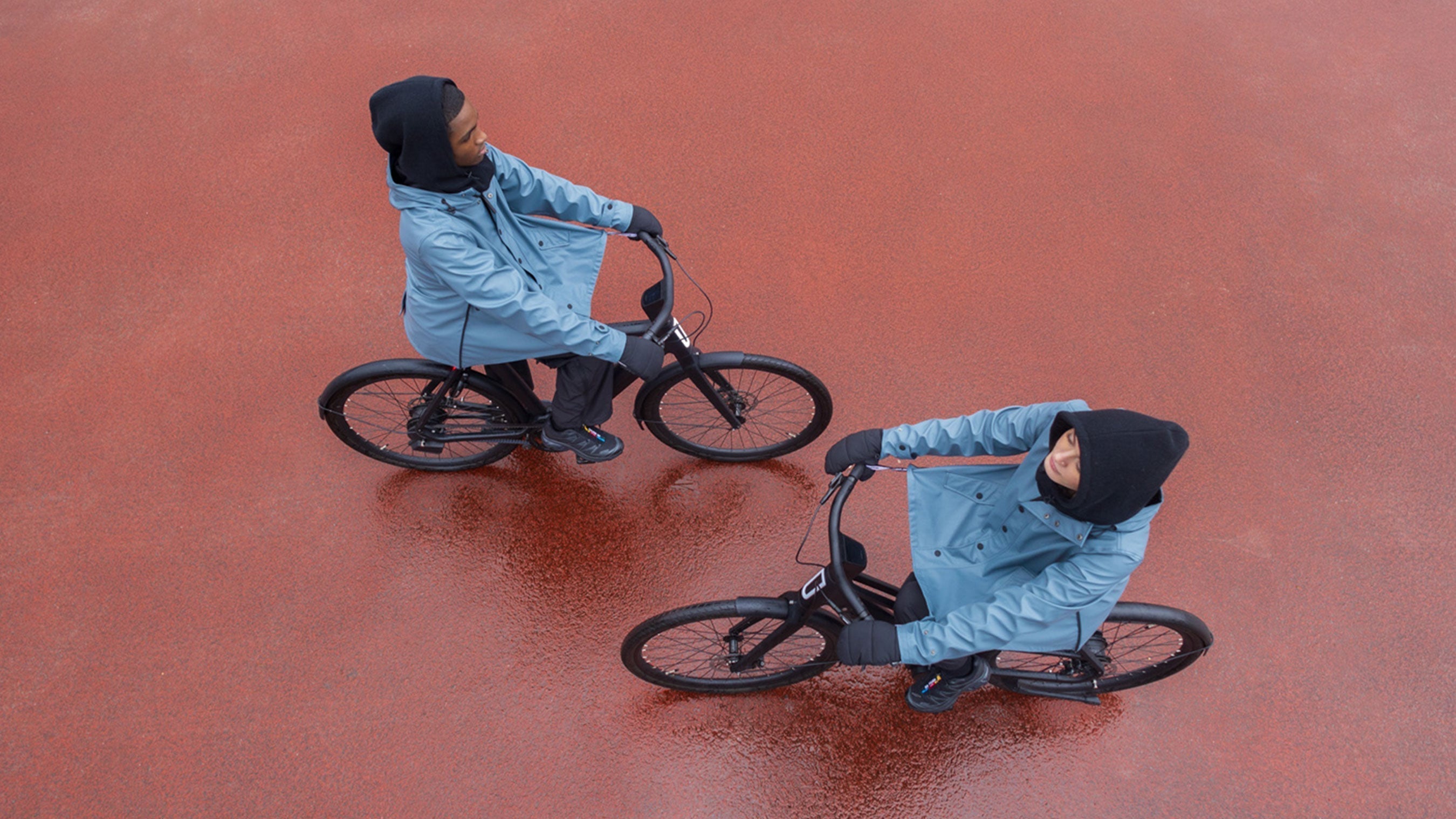
If you ride your bike in real-world weather, you already know the problem. Most raincoats work fine until you put your hands on the handlebars. Then your sleeves ride up, your knees get soaked, and the wind finds that one gap you forgot was there.
A good cycling raincoat isn't just "waterproof." It's a system: coverage, mobility, ventilation, and details that keep working while you're riding.
This is the checklist we use at MAIUM, based on how our jackets are designed to perform while riding a bike or e-scooter.
What makes the best raincoat for cycling?
1. Protection that stays in place while you ride
When riding a bike, you need protection where the rain actually hits: your hands, thighs, knees, and the front of your body when the wind blows water sideways.
That is why we use the distinctive side zippers. Open them, and the coat transforms into a poncho-style garment for riding.
Then it's all about how you wear it:
- Drape the front panel over your handlebars
- Use the built-in "bike holes" to slip your hands through and keep a firm grip on the handlebars
- For ease of movement, drape the back over the bike seat so you can move freely
This is the difference between "I own a raincoat" and "I arrived dry".
2. A waterproof rating that makes sense for riding
If you're comparing jackets, you'll keep seeing the term "water column." That number refers to water pressure resistance. Many of our core styles have a water column rating of 10,000 mm, including the Original, Poncho, Mac, and Trench.
So, is 10,000 mm waterproof enough for cycling? Yes. A waterproof rating of 5,000 to 10,000 mm is designed for longer rides in heavy rain and wet snow, so 10,000 mm is just right for commuting and everyday riding.
3. Breathability tailored to your riding style
Breathability is what keeps "wet inside" from becoming your new normal. We measure breathability using MVTR – this means allowing moisture to escape from the inside while keeping water out.
MAIUM's breathability guide:
- Over 3,000 g/m²/24h for light exercise, such as regular cycling
- Over 5,000 g/m²/24h for intense exercise, such as vigorous cycling
In the collection, you'll notice differences in style. For example, the Mac lists 4000 g/m² breathability, while the Trench has a breathability rating of 5000 g/m². Even styles that do not specify breathability due to their waterproof coating (e.g., the Original) feature ventilation holes under the arms.
So if you tend to overheat or ride fast, choose accordingly.
4. Construction details that stop leaks at their source
A fabric rating is only part of the story. On a bike, weak spots become apparent quickly: seams, zippers, hood edges, and cuff openings.
Across our key styles, you'll find sealed and taped seams, water-repellent zippers with flaps, adjustable cuffs, and high collars designed to cover your mouth and nose.
Which MAIUM style is best for cycling?
It depends on your ride. Here's a practical way to choose.
The Original
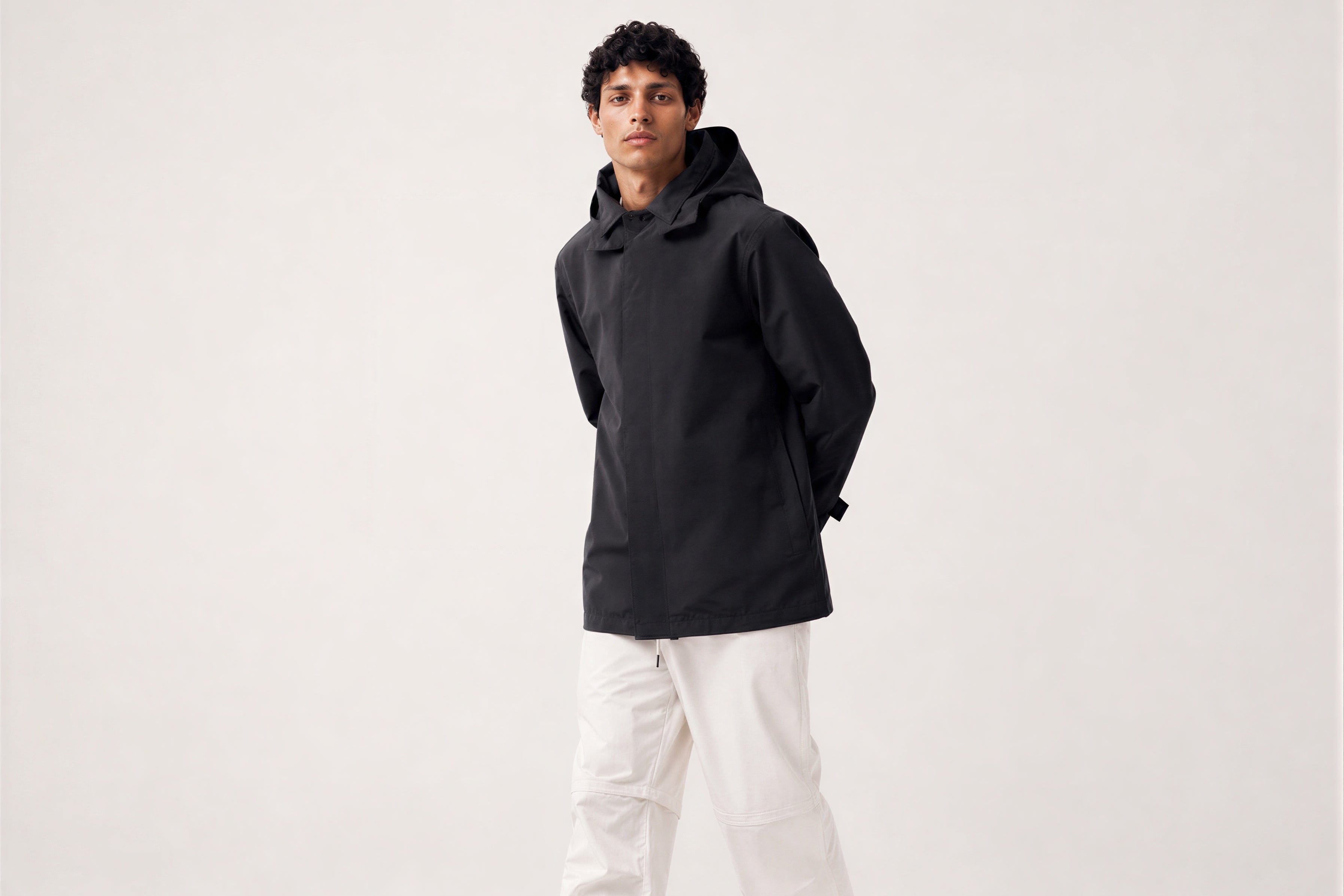
For full rain protection, city commuting, and slower rides where staying dry is the priority. It converts into a poncho using the side zippers, features a 10,000 mm water column and sealed seams, plus ventilation holes under the arms.
It is also made from 66 recycled PET bottles.
The Poncho
For easy packing and quick coverage. It folds into a built-in pouch and converts into a larger poncho for use while biking or riding an e-scooter.
It features a 10,000 mm water column, taped seams, and ventilation holes under the arms.
The Mac
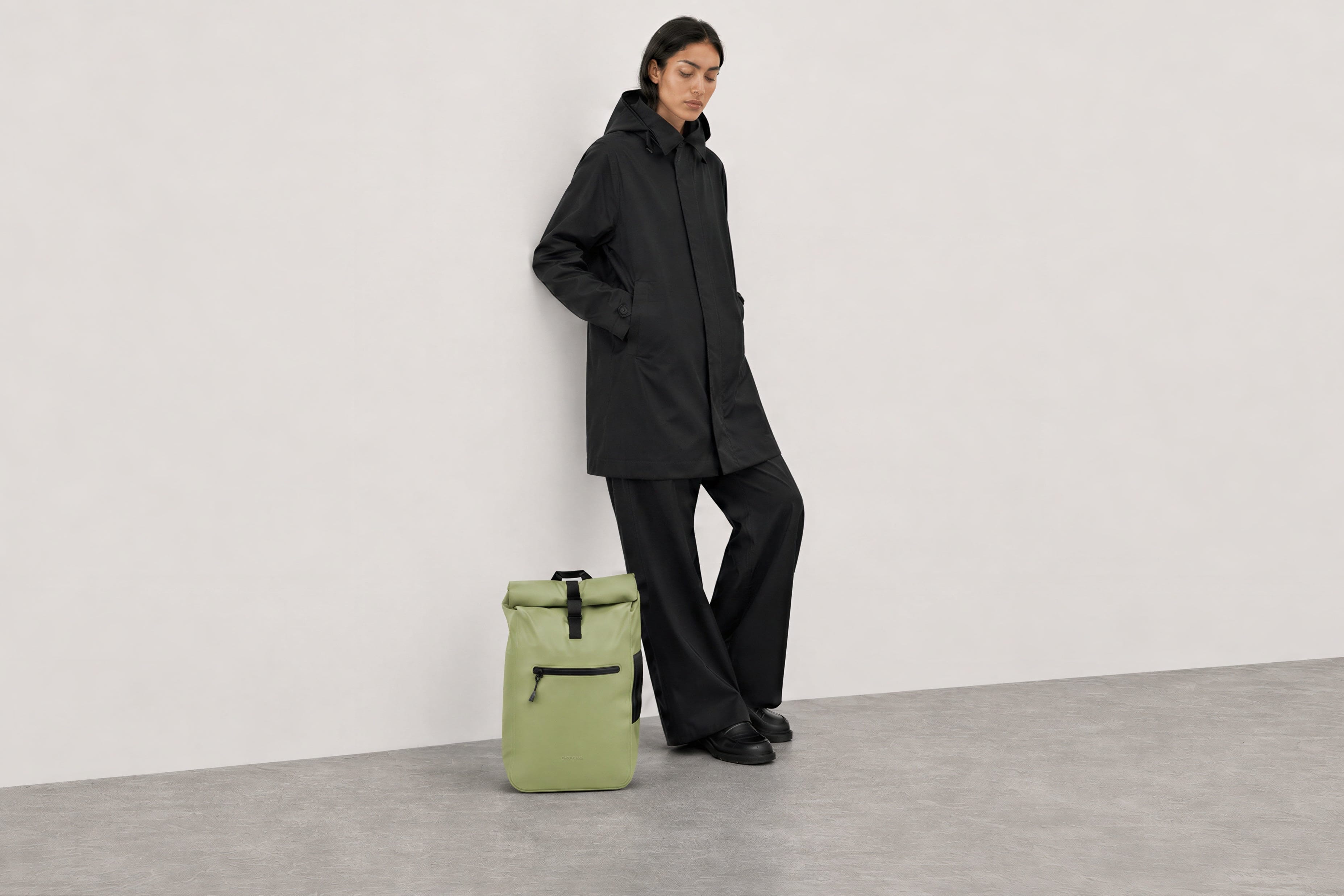
For everyday cycling when you want waterproofing and controlled breathability. The Mac converts into a poncho for biking, with a water column rating of 10,000 mm and a breathability rating of 4,000 breathability (g/m²), taped seams, and ventilation holes.
Made from 99 recycled plastic bottles.
The Trench
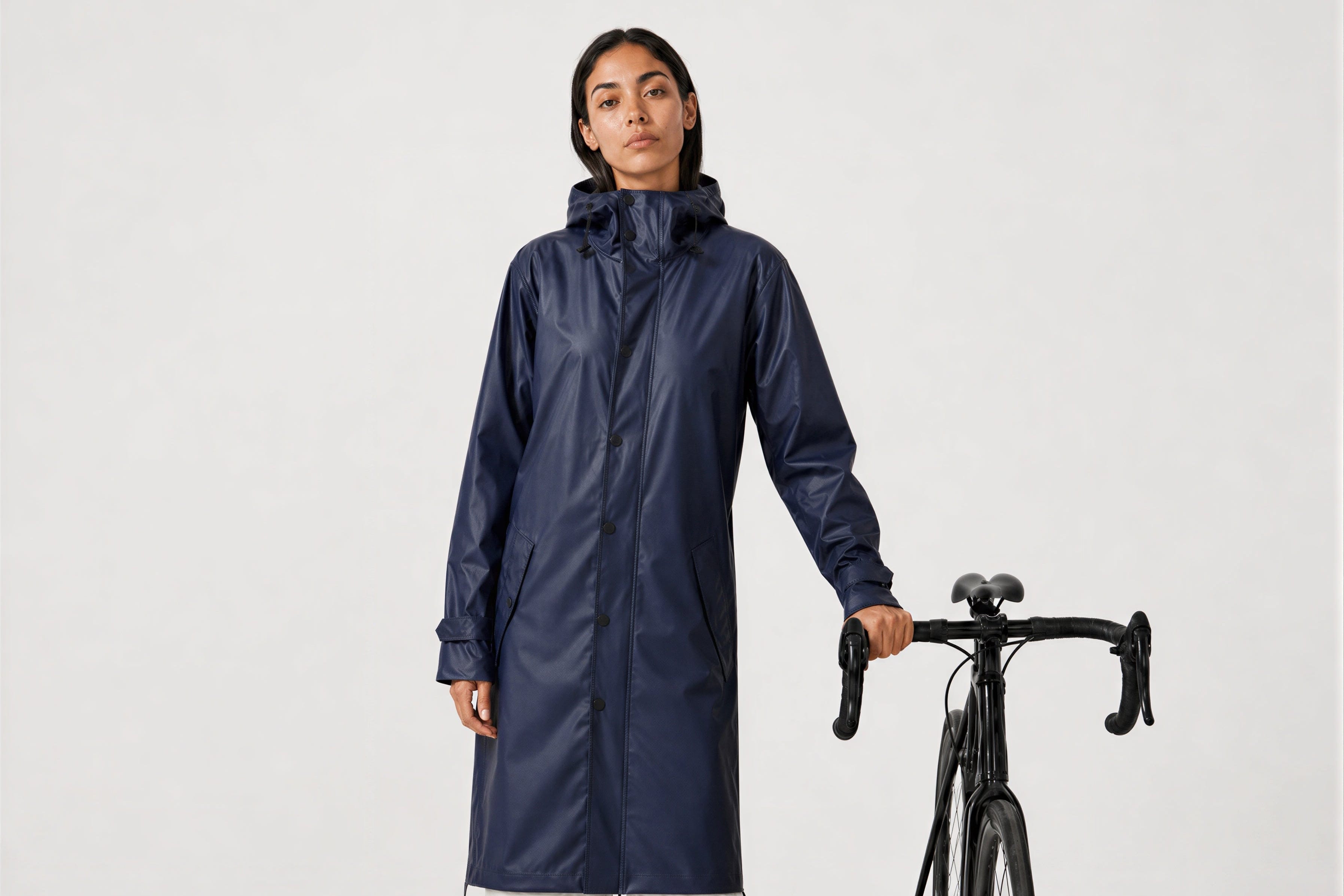
For longer coverage and greater breathability. It converts into a poncho for biking or riding an e-scooter, with a water column rating of 10,000 mm and a wind resistance rating of 5,000 breathability of g/m², plus taped seams and ventilation holes.
Made from 111 recycled plastic bottles.
The Original Balmacaan
A classic, relaxed-fit overcoat with raglan sleeves for greater freedom of movement. It converts into a poncho for cycling or riding a scooter, featuring a 10,000 mm water column rating, taped seams, and ventilation holes under the arms.
Made from 77 recycled PET bottles.

How to wear a MAIUM raincoat while riding a bike
- Open the side zippers to create the poncho shape
- Drape the front panel over your handlebars
- Put your hands through the handlebar holes and grip the handlebars
- For ease of movement, drape the back over the bike seat
That's the whole point: the coat adapts to the ride, not the other way around.
So, what makes a raincoat good for cycling?
Coverage that stays in place while riding, waterproof construction, ventilation or breathability, and a hood and cuffs that seal tightly. We designed it to handle it all, plus our signature side zippers and bike holes that let the coat convert into a poncho for riding.
Our styles are designed for movement. That's why we call ourselves bad weather experts.


